





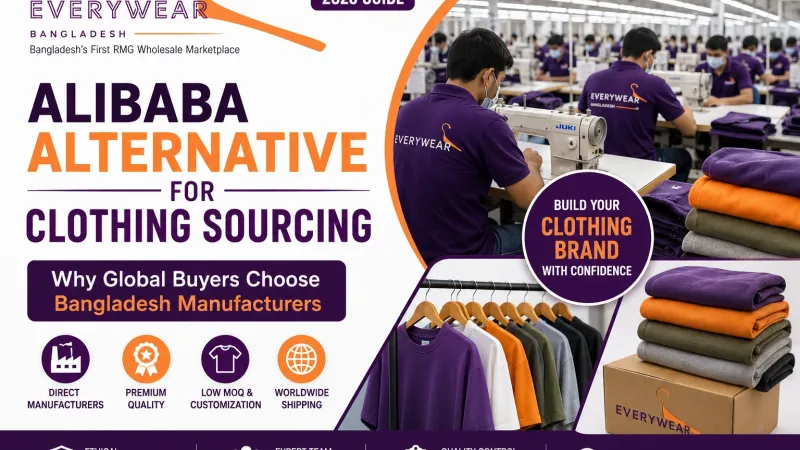
Why Global Buyers Are Moving Beyond Alibaba for Clothing Sourcing
For more than two decades, Alibaba has been one of the world's largest B2B marketplaces for finding suppliers and manufacturers. Millions of entrepreneurs, wholesalers, Amazon sellers, Shopify merchants, WooCommerce store owners, clothing brands, and retailers have used Alibaba to source apparel from various countries. While the platform offers convenience and access to thousands of suppliers, many experienced buyers eventually encounter challenges that lead them to explore alternatives.
Today, one of the fastest-growing alternatives is sourcing directly from Bangladesh clothing manufacturers. Instead of relying on marketplaces where manufacturers, trading companies, and middlemen compete for attention, international buyers increasingly prefer building long-term relationships with verified factories that specialize in export-quality apparel.
If your goal is to build a sustainable fashion business rather than simply purchase inventory, working directly with a clothing manufacturer in Bangladesh offers advantages that extend far beyond pricing. You gain better communication, stronger quality control, greater customization, improved production transparency, and the opportunity to create exclusive private-label collections.
Bangladesh has earned a reputation as one of the world's largest apparel manufacturing hubs. The country's Ready-Made Garment (RMG) industry exports billions of dollars worth of garments annually to North America, Europe, Australia, the Middle East, and Africa. Global fashion brands trust Bangladesh because of its experienced workforce, modern factories, internationally recognized compliance standards, and ability to manufacture high-quality garments at competitive prices.
Unlike purchasing ready-made products through a marketplace, direct manufacturing allows brands to control every stage of product development. From fabric selection and garment construction to branding, packaging, and shipping, businesses have the flexibility to create apparel that reflects their unique identity.
At Everywear Bangladesh, we help international buyers simplify this process by connecting them with trusted garment manufacturers capable of producing export-quality apparel with low MOQ options, private-label solutions, OEM manufacturing, and worldwide delivery.
This comprehensive guide explains why thousands of businesses are now choosing Bangladesh manufacturers instead of relying solely on Alibaba, and how direct factory sourcing can improve your long-term business success.
What Makes Bangladesh One of the World's Leading Clothing Manufacturing Hubs?
When buyers search for Bangladesh clothing manufacturers, they are often surprised by the country's manufacturing capabilities. Bangladesh is not simply a low-cost production destination—it is one of the largest and most sophisticated apparel manufacturing ecosystems in the world.
The Ready-Made Garment (RMG) sector forms the backbone of Bangladesh's export economy. Thousands of factories produce apparel for internationally recognized brands, meeting demanding quality standards while maintaining competitive pricing. This combination of experience and efficiency has positioned Bangladesh among the world's top garment exporters.
Several factors contribute to Bangladesh's global reputation.
First, the country has decades of expertise in garment manufacturing. Millions of skilled workers, experienced production managers, and specialized technicians contribute to efficient production processes that support businesses ranging from startups to multinational fashion companies.
Second, Bangladesh continues investing in advanced production technologies. Modern factories utilize automated cutting machines, computerized embroidery systems, digital pattern development, advanced printing technologies, and strict quality management systems to improve consistency and reduce production errors.
Third, compliance has become a defining strength of the Bangladeshi garment industry. Many export-oriented factories maintain internationally recognized certifications such as BSCI, WRAP, SEDEX, OEKO-TEX, ISO, and GOTS. These standards help ensure ethical production, workplace safety, environmental responsibility, and product quality.
Another important advantage is manufacturing diversity.
Bangladesh manufacturers produce:
- Oversized T-Shirts
- Blank T-Shirts
- Polo Shirts
- Hoodies
- Sweatshirts
- Sportswear
- Activewear
- Streetwear
- Kidswear
- Women's Apparel
- Men's Fashion
- Corporate Uniforms
- School Uniforms
- Fashion Accessories
- Private Label Clothing
Whether you require heavy GSM streetwear, performance sportswear, premium basics, or sustainable apparel collections, Bangladesh offers manufacturing expertise across virtually every clothing category.
For buyers seeking clothing suppliers from Bangladesh, direct factory relationships often provide greater transparency than sourcing through marketplace intermediaries.
Alibaba vs. Direct Bangladesh Manufacturers: What's the Difference?
Many new buyers assume that Alibaba itself manufactures clothing. In reality, Alibaba is a marketplace that connects buyers with suppliers, trading companies, manufacturers, and agents from different countries.
This distinction is important because not every supplier listed on Alibaba owns a production facility.
Some suppliers are:
- Manufacturers
- Trading Companies
- Export Agents
- Buying Houses
- Wholesalers
- Product Aggregators
As a result, buyers sometimes pay additional markups without realizing that intermediaries are involved.
Working directly with Bangladesh garment manufacturers offers a different experience.
Instead of communicating through multiple layers, buyers often interact directly with production teams responsible for manufacturing their products.
This direct relationship creates several advantages:
Better Communication
Questions about fabrics, production methods, sizing, sampling, packaging, and shipping receive faster and more accurate responses.
Greater Product Customization
Factories can recommend construction improvements, alternative fabrics, finishing techniques, and branding options that marketplace resellers may not fully understand.
Improved Quality Control
Direct manufacturers typically provide greater visibility into production stages, allowing buyers to monitor quality throughout the manufacturing process.
Stronger Long-Term Relationships
Instead of placing isolated orders with different suppliers, businesses build strategic manufacturing partnerships that improve efficiency over time.
For brands focused on long-term growth, direct sourcing creates a more sustainable supply chain.
Why Direct Factory Relationships Produce Better Clothing Brands
The most successful fashion brands rarely rely entirely on marketplaces.
Instead, they invest time in building trusted manufacturing relationships.
A direct factory partnership allows businesses to move beyond simple purchasing transactions and collaborate on continuous product improvement.
For example, if a clothing brand wants to introduce heavier fabrics, improve garment fit, modify stitching, or develop new collections, experienced factories can provide technical guidance throughout the development process.
These collaborations often include:
- Fabric recommendations
- Pattern development
- Size grading
- Printing techniques
- Embroidery options
- Packaging improvements
- Cost optimization
- Production scheduling
Over time, manufacturers gain a deeper understanding of your brand's expectations, resulting in greater consistency across future orders.
For businesses using WooCommerce, Shopify, Amazon, Etsy, Walmart Marketplace, or their own websites, consistency is essential. Customers expect every product to match previous purchases in quality, fit, and appearance.
Direct factory relationships make that level of consistency much easier to achieve.
Why Everywear Bangladesh Is a Trusted Alibaba Alternative
Finding reliable manufacturers can feel overwhelming, especially for entrepreneurs sourcing internationally for the first time.
Everywear Bangladesh was established to simplify the sourcing journey by helping international buyers connect directly with experienced Bangladeshi garment manufacturers.
Rather than searching through thousands of marketplace listings, buyers receive guidance throughout the manufacturing process.
Our services include:
- Private Label Manufacturing
- OEM Clothing Production
- Custom Garment Manufacturing
- Product Development
- Fabric Sourcing
- Pattern Making
- Sample Development
- Screen Printing
- High-Density Printing
- Puff Printing
- Embroidery
- Washing Solutions
- Quality Control
- Packaging
- Export Documentation
- Worldwide Shipping
We support businesses of all sizes—from startup fashion brands launching their first collection to established retailers seeking dependable long-term manufacturing partners.
For many clients, Everywear Bangladesh becomes more than a sourcing company. We become an extension of their business, helping them manufacture apparel that reflects their brand identity while ensuring production quality and reliable delivery.
Our goal is simple: provide buyers with a transparent, factory-direct sourcing experience that reduces unnecessary intermediaries and supports long-term business growth.
How to Identify Genuine Bangladesh Clothing Manufacturers Instead of Trading Companies
One of the biggest challenges international buyers face when searching for Bangladesh clothing manufacturers is distinguishing genuine factories from trading companies. While trading companies can sometimes provide useful sourcing services, businesses seeking long-term partnerships, better pricing, and greater production control often benefit from working directly with manufacturers.
When searching online, you'll encounter thousands of suppliers claiming to own factories. However, many operate as intermediaries, outsourcing production to third-party facilities. This can create communication delays, inconsistent quality, longer lead times, and additional costs.
Here are practical ways to identify genuine manufacturers.
Verify Factory Information
Ask for detailed company information, including factory location, production capacity, machinery list, employee size, and export markets. Genuine manufacturers are usually transparent about their facilities.
Request Factory Certifications
Reliable manufacturers commonly hold certifications such as:
- BSCI
- WRAP
- OEKO-TEX
- GOTS
- SEDEX
- ISO 9001
These certifications indicate commitment to quality, ethical production, and international compliance standards.
Review Production Capabilities
Ask questions like:
- What garments do you specialize in?
- What GSM fabrics do you manufacture?
- What printing methods are available?
- What embroidery facilities do you have?
- What are your monthly production capacities?
Experienced manufacturers provide detailed answers rather than vague responses.
Ask for Factory Videos
A genuine clothing manufacturer can usually provide:
- Production floor videos
- Cutting section
- Sewing lines
- Quality inspection
- Finishing department
- Packing section
- Warehouse
- Fabric inspection
These visuals demonstrate actual production capabilities.
Request Previous Export Experience
Established Bangladesh garment manufacturers typically export to:
- USA
- Canada
- UK
- Germany
- France
- Netherlands
- Australia
- UAE
- Saudi Arabia
- South Africa
Experience with international buyers reduces risks related to compliance and shipping documentation.
Evaluate Communication
Professional manufacturers communicate clearly about:
- MOQ
- Sampling
- Lead times
- Payment terms
- Shipping methods
- Production planning
Fast, transparent communication often reflects a well-managed manufacturing operation.
Building relationships with verified factories helps brands reduce sourcing risks while improving consistency across future production orders.
Common Problems Buyers Face on Alibaba and How Direct Bangladesh Sourcing Solves Them
Alibaba remains a useful sourcing platform, but experienced buyers often encounter recurring challenges that can slow business growth.
Understanding these issues helps businesses make informed sourcing decisions.
Problem 1: Multiple Middlemen
A product inquiry may pass through several intermediaries before reaching the actual factory.
This can result in:
- Higher pricing
- Slower communication
- Incorrect technical information
- Delayed production updates
Working directly with clothing manufacturers in Bangladesh eliminates unnecessary layers.
Problem 2: Inconsistent Product Quality
Marketplace suppliers may use different factories for repeat orders.
The result can include:
- Fabric differences
- Color variation
- Stitch inconsistencies
- Sizing changes
Direct factory relationships maintain production consistency.
Problem 3: Limited Product Customization
Marketplace suppliers often focus on existing catalog products.
Modern fashion brands require:
- Custom sizing
- Custom GSM
- Brand labels
- Neck labels
- Hangtags
- Custom packaging
- Exclusive designs
Direct manufacturers provide far greater flexibility.
Problem 4: Poor Technical Knowledge
Some resellers cannot explain garment construction.
Experienced Bangladesh manufacturers understand:
- Fabric composition
- Stitch density
- Pattern engineering
- Garment measurement
- Wash treatments
- Printing technologies
This expertise helps improve product quality.
Problem 5: Hidden Costs
Marketplace pricing may exclude:
- Packaging
- Branding
- Export documentation
- Shipping charges
- Inspection costs
Direct factory quotations are generally more transparent.
Problem 6: Long-Term Growth Limitations
Successful brands rarely change manufacturers every season.
Long-term factory relationships allow continuous product improvement, cost optimization, and production planning.
As order volumes increase, trusted manufacturers often provide better pricing, faster scheduling, and priority production.
Step-by-Step Guide to Sourcing Clothing Directly from Bangladesh
For first-time importers, sourcing clothing internationally may seem complicated. However, following a structured process significantly reduces risk.
Step 1 – Define Your Product
Before contacting suppliers, prepare:
- Product type
- Target market
- Fabric preference
- GSM
- Color options
- Size chart
- Logo placement
- Printing requirements
- Embroidery details
- Packaging requirements
Clear specifications reduce misunderstandings.
Step 2 – Shortlist Manufacturers
Focus on manufacturers specializing in your niche.
Examples include:
- Streetwear
- Sportswear
- Oversized T-shirts
- Hoodies
- Children's clothing
- Corporate apparel
- Fashion basics
Specialized factories generally produce higher-quality products.
Step 3 – Discuss MOQ
Ask about:
- Minimum order quantity
- Color MOQ
- Size breakdown
- Production capacity
- Repeat order flexibility
Many Bangladesh manufacturers now support lower MOQs for startup brands.
Step 4 – Develop Samples
Never skip sampling.
Review:
- Fabric quality
- Measurements
- Stitching
- Printing
- Embroidery
- Label placement
- Overall finishing
Adjust the sample until it meets brand expectations.
Step 5 – Confirm Pricing
Discuss:
- FOB pricing
- EXW pricing
- CIF pricing
- Shipping options
- Payment schedule
- Production timeline
Transparent pricing prevents unexpected expenses later.
Step 6 – Begin Bulk Production
Once samples receive approval:
- Fabric procurement begins.
- Accessories are ordered.
- Cutting starts.
- Sewing lines are scheduled.
- Printing and embroidery are completed.
- Finishing and quality inspection take place.
Step 7 – Quality Inspection
Professional factories inspect:
- Measurements
- Fabric defects
- Stitch quality
- Color consistency
- Printing durability
- Packaging accuracy
Comprehensive inspections reduce customer complaints.
Step 8 – Export and Shipping
Most Bangladesh manufacturers support:
- Sea Freight
- Air Freight
- Express Courier
- Door-to-Door Delivery
- FOB
- CIF
- DDP (where available)
International documentation typically includes commercial invoices, packing lists, certificates of origin, and shipping documents.
Following these steps creates a smoother sourcing experience and supports long-term supplier relationships.
Understanding MOQ, Pricing, and Production Costs
One of the most frequently searched questions is:
"What is the minimum order quantity when sourcing clothing from Bangladesh?"
The answer depends on several factors.
Typical MOQ considerations include:
- Garment category
- Fabric availability
- Number of colors
- Printing requirements
- Embroidery complexity
- Custom accessories
- Packaging customization
Basic products generally require lower MOQs than highly customized garments.
For example:
| Product | Typical MOQ* |
|---|---|
| Blank T-Shirts | Lower |
| Basic Hoodies | Medium |
| Oversized Streetwear | Medium |
| Fully Custom Private Label Collections | Higher |
*MOQ varies by factory, fabric, and customization requirements.
Pricing depends on:
- Fabric quality
- GSM
- Cotton composition
- Organic materials
- Printing methods
- Embroidery
- Washing process
- Packaging
- Order quantity
Instead of choosing the cheapest quotation, buyers should evaluate overall value.
An experienced manufacturer may offer:
- Better consistency
- Lower defect rates
- Faster communication
- Reliable production schedules
- Stronger quality control
These advantages often reduce total business costs over time.
Private Label Clothing Manufacturing: Build Your Own Brand Instead of Selling Generic Products
One of the biggest reasons brands choose Bangladesh clothing manufacturers over generic marketplace sourcing is the opportunity to build a unique identity through private-label production.
Rather than purchasing products that hundreds of other sellers can also buy, private-label manufacturing allows you to create exclusive apparel that represents your own business.
Private-label services typically include:
- Custom woven labels
- Printed neck labels
- Heat transfer branding
- Hangtags
- Custom poly bags
- Branded cartons
- Exclusive packaging
- Personalized size labels
- Custom artwork
- Fabric selection
This approach helps businesses establish stronger customer recognition and improve repeat purchases.
Whether you sell through Shopify, WooCommerce, Amazon, Walmart Marketplace, Etsy, TikTok Shop, or your own website, branded products differentiate your business in an increasingly competitive market.
Bangladesh has become a preferred destination for private-label manufacturing because of its experienced workforce, competitive production costs, and ability to handle both startup orders and large-scale production efficiently.
Quality Control, Compliance, and Ethical Manufacturing: Why Bangladesh Has Become a Trusted Global Apparel Hub
One of the biggest concerns for international buyers is product quality. Whether you're running a startup clothing brand or supplying products to thousands of customers every month, poor-quality garments can damage your reputation, increase return rates, and reduce customer trust. This is one of the reasons why experienced buyers now prefer working directly with Bangladesh clothing manufacturers rather than sourcing through unknown marketplace suppliers.
Bangladesh has invested heavily in improving manufacturing standards over the past decade. Today, many export-oriented factories operate with internationally recognized quality management systems, advanced machinery, and dedicated quality assurance teams. These improvements have made Bangladesh one of the most trusted apparel manufacturing destinations for global fashion brands.
Professional factories follow quality control procedures throughout the production cycle instead of inspecting products only at the end.
A standard quality control process includes:
• Fabric Inspection
• Pattern Verification
• Sample Approval
• Cutting Inspection
• Sewing Line Inspection
• Measurement Verification
• Printing Inspection
• Embroidery Inspection
• Washing Inspection
• Finishing Inspection
• Packing Inspection
• Final Random Inspection
Each production stage helps identify issues before they become expensive problems.
For buyers looking for clothing suppliers from Bangladesh, asking about quality procedures is just as important as discussing price.
Reliable factories also maintain strict compliance standards.
Many manufacturers operate under internationally recognized certifications such as:
• BSCI
• WRAP
• SEDEX
• ISO 9001
• OEKO-TEX Standard 100
• GOTS (for organic products)
These certifications demonstrate responsible manufacturing, worker safety, environmental awareness, and quality assurance.
Ethical manufacturing has become increasingly important for brands selling through Shopify, WooCommerce, Amazon, Walmart Marketplace, Etsy, and independent online stores. Consumers now expect transparency throughout the supply chain, making compliance an essential competitive advantage rather than simply a legal requirement.
Bangladesh's garment industry continues investing in sustainable production, energy-efficient facilities, wastewater treatment, renewable energy, and environmentally friendly manufacturing processes.
As a result, many international buyers now choose Bangladesh not only because of competitive pricing but because they can confidently source products from factories that meet global compliance expectations.
Shipping, Export Process, and Worldwide Delivery
After production is complete, efficient logistics become the next priority. Bangladesh has developed a sophisticated export infrastructure capable of shipping garments to nearly every major international market.
Experienced Bangladesh garment manufacturers regularly export clothing to:
• United States
• Canada
• United Kingdom
• Germany
• France
• Netherlands
• Spain
• Italy
• Australia
• UAE
• Saudi Arabia
• South Africa
• Nigeria
• Kenya
Several shipping methods are available depending on order size, urgency, and destination.
Air Freight
Ideal for:
• Sample shipments
• Urgent restocking
• Product launches
• Small production runs
Advantages include faster delivery and reduced lead times.
Sea Freight
Best suited for:
• Bulk orders
• Wholesale shipments
• Container exports
• Lower transportation costs
Although transit takes longer, sea freight remains the most economical solution for large apparel orders.
Express Courier
Services such as DHL, FedEx, UPS, and TNT are commonly used for:
• Samples
• Documentation
• Small quantities
• Time-sensitive deliveries
Professional manufacturers also assist buyers with export documentation, including:
• Commercial Invoice
• Packing List
• Certificate of Origin
• Bill of Lading
• Air Waybill
• Export Declaration
• Inspection Reports (when required)
Understanding Incoterms is equally important.
Common shipping terms include:
FOB (Free On Board)
The manufacturer delivers goods to the designated port. The buyer manages international freight.
CIF (Cost, Insurance, Freight)
The supplier arranges shipping and insurance to the destination port.
DDP (Delivered Duty Paid)
Where available, the supplier handles transportation, customs clearance, and delivery to the buyer's location.
For first-time importers, working with an experienced sourcing partner like Everywear Bangladesh simplifies the export process and reduces costly mistakes.
Real-World Example: Why a Growing Fashion Brand Switched from Alibaba to Bangladesh
Imagine a small clothing brand selling oversized T-shirts through Shopify and WooCommerce.
Initially, the owner sourced products through Alibaba because it appeared to be the easiest solution.
However, after several production cycles, recurring issues began to appear:
• Different fabric quality between orders
• Size inconsistencies
• Delayed communication
• Limited customization
• Higher costs due to middlemen
• Long sampling revisions
The business eventually partnered directly with a Bangladesh clothing manufacturer through Everywear Bangladesh.
The production process changed significantly.
Instead of selecting catalog products, the brand developed its own collection.
The manufacturer assisted with:
• Heavyweight cotton fabric selection
• European fit development
• Custom neck labels
• High-density printing
• Premium woven labels
• Custom packaging
• Export documentation
• Door-to-door shipping
Within one year, the brand achieved:
• Better product consistency
• Lower manufacturing costs
• Higher customer satisfaction
• Increased repeat purchases
• Stronger profit margins
• Faster product launches
Although every business has unique requirements, this example demonstrates why direct factory partnerships often outperform marketplace-only sourcing.
Why Everywear Bangladesh Is More Than a Manufacturer
At Everywear Bangladesh, our objective is not simply producing garments.
We help businesses build long-term manufacturing partnerships.
Whether you operate:
• Shopify Store
• WooCommerce Store
• Amazon Brand
• Walmart Marketplace Store
• Etsy Shop
• TikTok Shop
• Independent Fashion Brand
Our team supports every stage of production.
Services include:
• Product Development
• Fabric Sourcing
• Pattern Making
• Sample Development
• Bulk Production
• Private Label Manufacturing
• OEM Production
• Custom Packaging
• Quality Inspection
• Export Documentation
• Worldwide Logistics
Our manufacturing network specializes in:
• Blank T-Shirts
• Oversized T-Shirts
• Hoodies
• Sweatshirts
• Polo Shirts
• Sportswear
• Activewear
• Streetwear
• Corporate Uniforms
• Children's Apparel
• Fashion Basics
From low MOQ startup orders to large wholesale production, Everywear Bangladesh helps businesses manufacture export-quality apparel while maintaining transparency throughout the sourcing process.
Conclusion
Finding reliable clothing manufacturers has become increasingly important as global competition grows and customer expectations continue rising.
While Alibaba remains a useful platform for discovering suppliers, many businesses eventually realize that long-term success depends on building direct relationships with experienced manufacturers rather than relying solely on marketplace listings.
Bangladesh has emerged as one of the world's leading apparel manufacturing destinations because of its skilled workforce, competitive pricing, modern production facilities, internationally recognized compliance standards, and extensive export experience.
For businesses searching for Bangladesh clothing manufacturers, clothing suppliers from Bangladesh, clothing manufacturer Bangladesh, or private label clothing manufacturer Bangladesh, direct sourcing offers greater transparency, improved quality control, stronger communication, and better opportunities to build unique fashion brands.
Whether you're launching your first clothing label or expanding an established international business, partnering with trusted manufacturers allows you to create products that stand out in today's competitive marketplace.
Everywear Bangladesh is committed to helping entrepreneurs, retailers, wholesalers, and fashion brands simplify apparel sourcing through factory-direct manufacturing, quality assurance, and reliable global delivery.
If you're ready to move beyond marketplace sourcing and establish a dependable manufacturing partnership, Bangladesh offers one of the strongest opportunities available in 2026 and beyond.
Frequently Asked Questions (FAQs)
1. Is Bangladesh a better alternative to Alibaba for clothing sourcing?
Alibaba is a marketplace, while Bangladesh is a manufacturing destination. Working directly with Bangladesh manufacturers often provides better communication, stronger quality control, more customization, and long-term partnerships compared to buying through intermediaries.
2. Can startup clothing brands order from Bangladesh?
Yes. Many manufacturers now support low MOQ production, making Bangladesh suitable for startups, independent designers, and growing fashion businesses looking for custom apparel manufacturing.
3. What types of clothing can Bangladesh manufacturers produce?
Bangladesh factories manufacture T-shirts, oversized apparel, hoodies, sweatshirts, sportswear, activewear, polo shirts, uniforms, kidswear, streetwear, workwear, and fully customized private-label collections.
4. How long does clothing production usually take?
Production timelines depend on the order size, product complexity, and material availability. Sample development, fabric sourcing, manufacturing, quality inspection, and shipping should all be considered when planning your inventory.
5. Why should I choose Everywear Bangladesh?
Everywear Bangladesh provides direct access to experienced garment manufacturers, low MOQ production, private-label services, OEM manufacturing, quality control, export documentation, and worldwide shipping—helping businesses build reliable, long-term sourcing partnerships.
Author Bio
Written by the Everywear Bangladesh Content & Sourcing Team
The Everywear Bangladesh editorial team combines practical experience in Bangladesh's Ready-Made Garment (RMG) industry with expertise in international apparel sourcing, private-label manufacturing, wholesale exports, and global supply chain management. Our goal is to help fashion brands, retailers, and eCommerce businesses make informed sourcing decisions through accurate, experience-based content.
Last Updated: 25 July 2026
Related Blog Posts
- Bangladesh RMG Wholesale Blog
- Shopify Clothing Manufacturer Bangladesh
- TikTok Shop Clothing Supplier Bangladesh
- Wholesale Clothing Suppliers for eBay Sellers Bangladesh
- Amazon Fashion Sellers Source Clothing from Bangladesh
- How to Start a Streetwear Brand with Bangladesh Manufacturers
- Low MOQ Clothing Manufacturer Bangladesh
- Import Clothes from Bangladesh – USA, UK, EU & Africa
- Buy Wholesale Garments from Bangladesh – Step by Step Guide
- Custom Garment Manufacturing Bangladesh 2026 Guide for Small Brands
- Bangladesh RMG Wholesale Marketplace – How Everywear Works
- Bangladesh vs China vs India Wholesale Clothing 2026
- Private Label Clothing Manufacturing Bangladesh – Complete Brand Guide 2026
- Oversized T-Shirt Manufacturer Bangladesh
- Etsy Clothing Manufacturer Bangladesh
- Oversized Hoodie Manufacturer Bangladesh
- Blank T-Shirt Manufacturer Bangladesh
- US Tariff Guide for Bangladesh Garment Imports 2026
- Clothing Suppliers from Bangladesh: The Ultimate Guide 2026
- Bangladesh Garment Industry Guide 2026
- Walmart Marketplace Clothing Sellers Bangladesh
- WooCommerce Store Owners Clothing from Bangladesh
Leave a comment